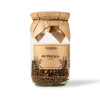

Propolis/ Bee glue - 100g
Leave feedback on the product
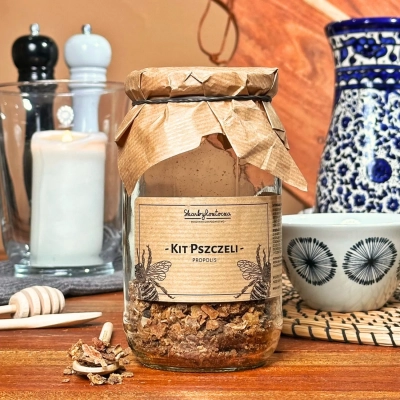


 An antibiotic from the apiary – it has powerful antibacterial, antiviral and antifungal effects
 An infection fighter – it soothes inflammation and sore throats and speeds up the healing of wounds
(1 business day)
Shipping cost for the selected product
The shipping cost applies to this product (in the selected variant - if applicable). It may change after adding other products to the cart.
Loyalty program
Collect points for buying products included in the loyalty program.
Redeem Virtual Bees for rewards in the Loyalty program products section.
Collect points for buying products included in the loyalty program. Start collecting Virtual Bees
Make an account or log in. You will find information about your collected Virtual Bees in the customer account.
Variants:
-
Price €10.00
-
Price €13.75
-
Price €1.25
-
Price €1.25
Description
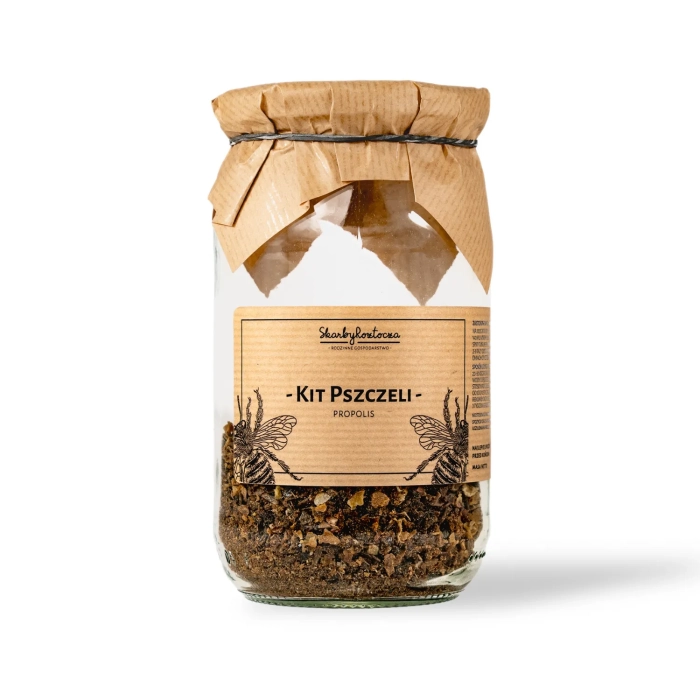
Propolis / bee glue - a natural antibiotic from the hive!
Bee glue, also known as propolis, is an exceptional product obtained from the hive. Bees produce it from resins they collect from the buds of trees and plants, and then enrich it with their own secretions, wax and essential oils. Propolis not only performs an important function in the hive – it has also been appreciated by people for centuries and used successfully in natural medicine. It supports immunity, soothes inflammation and helps fight bacteria, viruses and fungi, and it will also help in treating skin conditions and inflammation of the mouth. It can be used both internally and externally. But note – it is not suitable for eating as it is and must first be prepared properly before it can join our home medicine cabinet.
Propolis / bee glue - properties:
- A broad health-promoting action: Propolis has antibacterial, antiviral, antifungal, anti-inflammatory and antioxidant properties.
- It supports the immune system: Regular use of propolis strengthens the body’s natural immunity, gives energy and improves general well-being.
- An antioxidant action: Thanks to its high content of flavonoids and phenolic acids, propolis protects cells against oxidative stress, which may help prevent many lifestyle diseases.
- It supports the treatment of skin and oral conditions: It is helpful in treating skin conditions and inflammation of the mouth.

Bee glue and propolis - are they the same thing? Find out how bee glue is made.
Propolis and bee glue are two names for the same bee product. Worker bees, known as “foragers”, take an active part in producing it – their job is to collect resinous secretions from the buds and young shoots of deciduous and coniferous trees. Most often these are poplars, birches, alders, oaks and spruces, but also pines and horse chestnuts. It is the botanical variety that determines the colour of propolis – most often it is brown, while birch forage gives it a dark or even black colouring, and alder or poplar forage lends it lighter brown and yellow shades. The resinous substances collected are then transported to the hive in special baskets on the bees’ hind legs – exactly as with flower pollen.In the hive, the bees mix the collected resin with wax, pollen and glandular secretions. This creates a sticky, aromatic substance, that is bee glue, which the bees use for:
- sealing and insulating the hive: The bees use propolis to seal any cracks and openings in the hive, protecting it from wind, rain and cold.
- disinfecting the nest: Propolis has a strong antiseptic effect. The bees coat the inner walls of the hive with it, as well as the waxen cells in which the queen lays her eggs – this prevents the growth of bacteria, fungi and viruses and keeps the colony in excellent condition.
- protection against intruders: If an intruder gets into the hive that the bees are unable to remove by themselves, they mummify it with propolis, preventing decay and keeping the nest sterile.
Propolis - harvesting bee glue
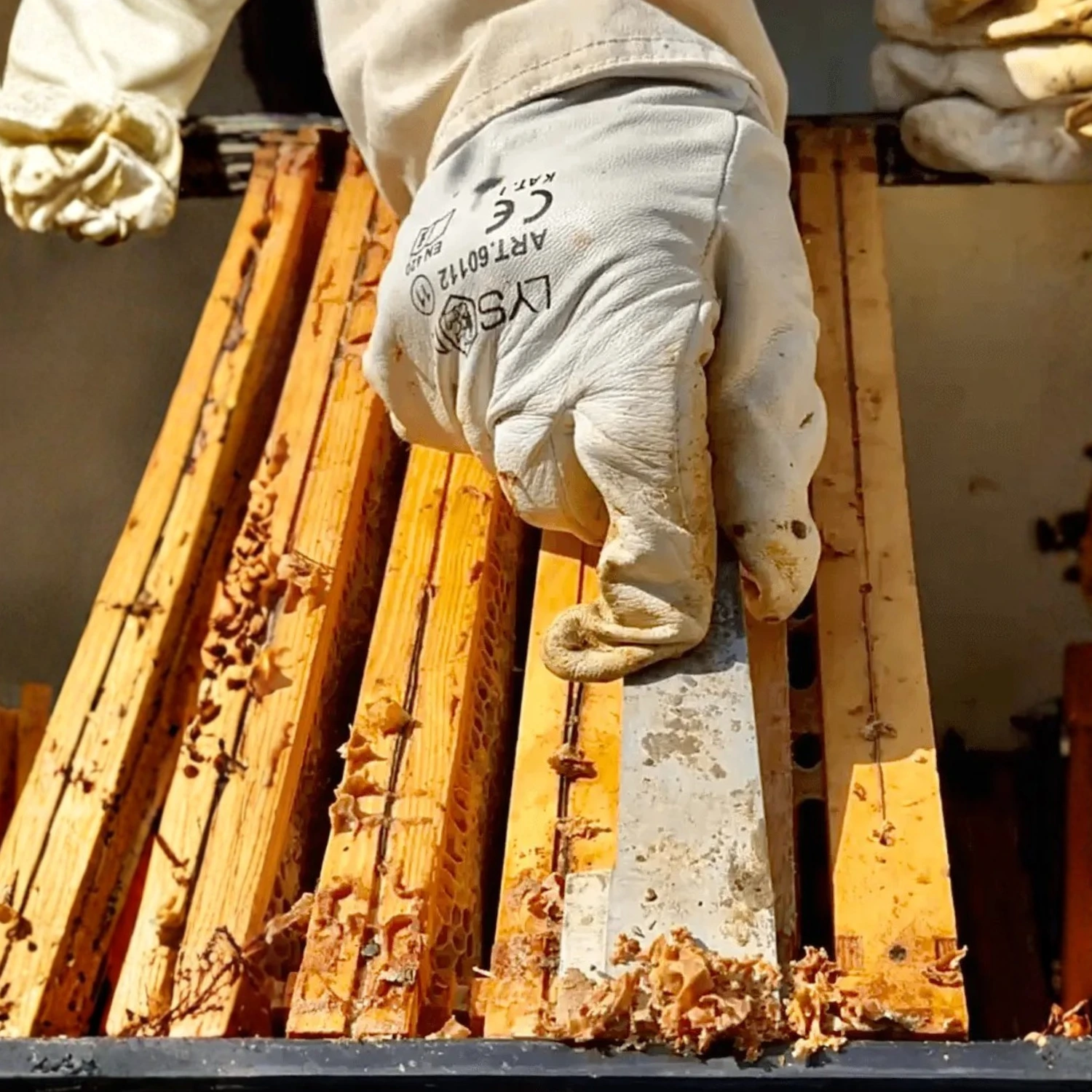
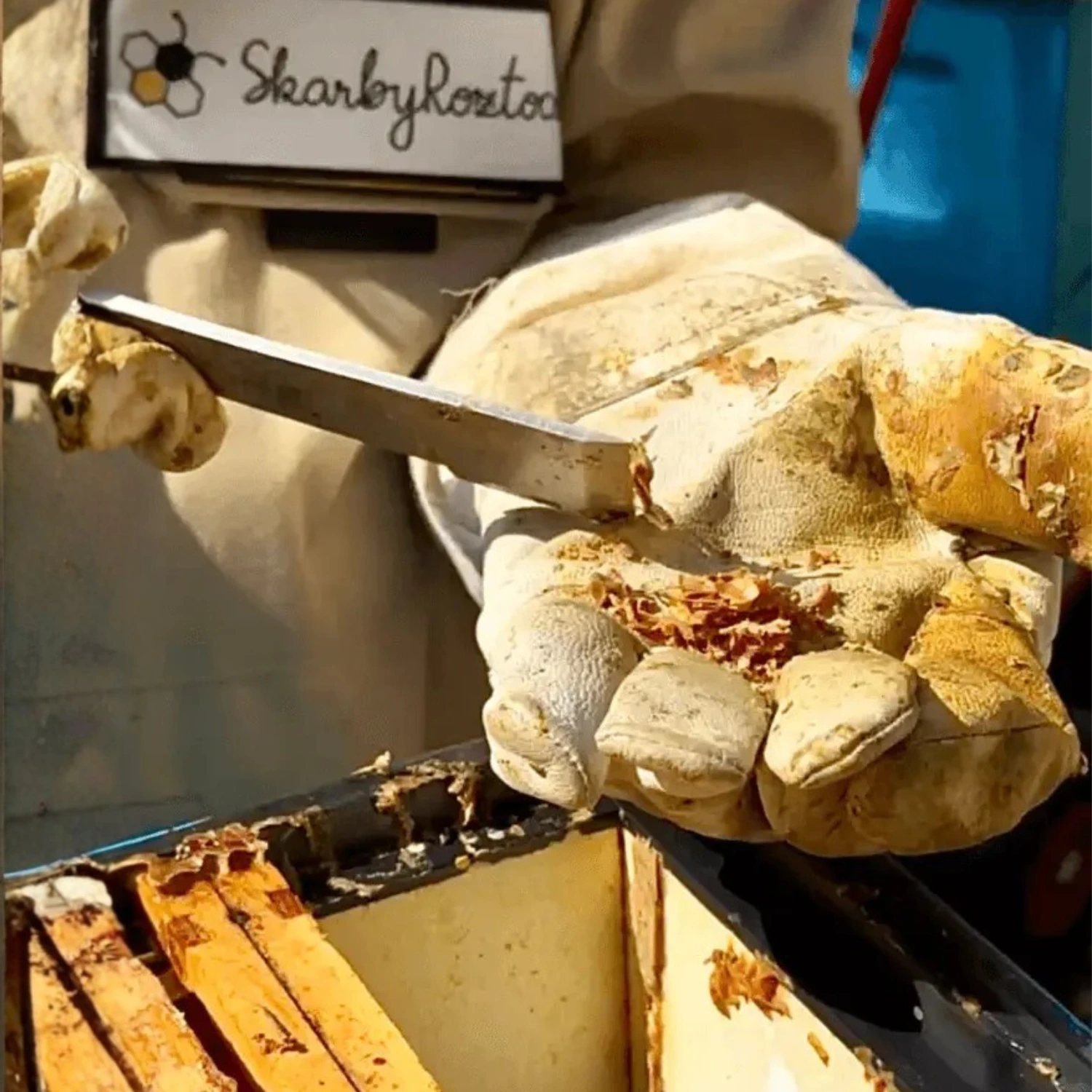
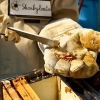
Bee glue is most often harvested out of season, because the bees “glue up the hive” most heavily just before winter arrives, instinctively preparing their home for the hardest period of the year. Every gap between the boxes, the ventilation openings and even the frames are glued together with propolis, which often makes it difficult to open the hive and inspect the colony.
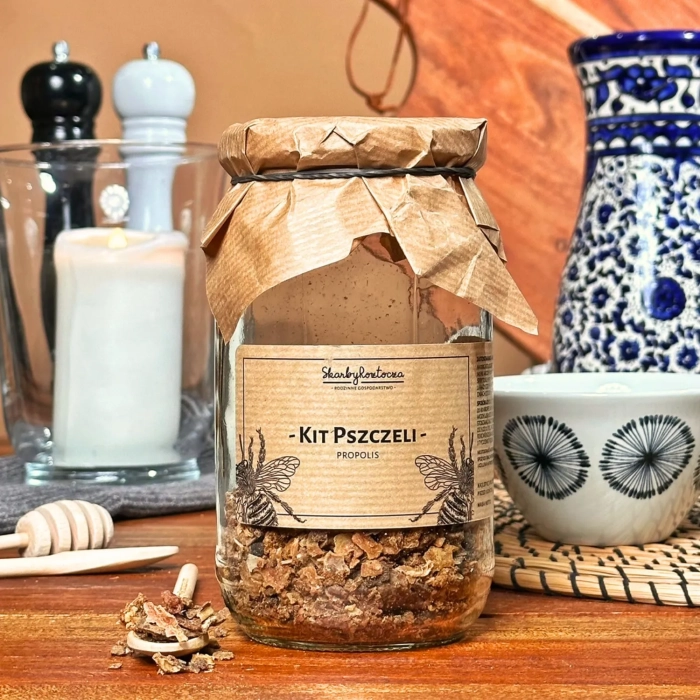
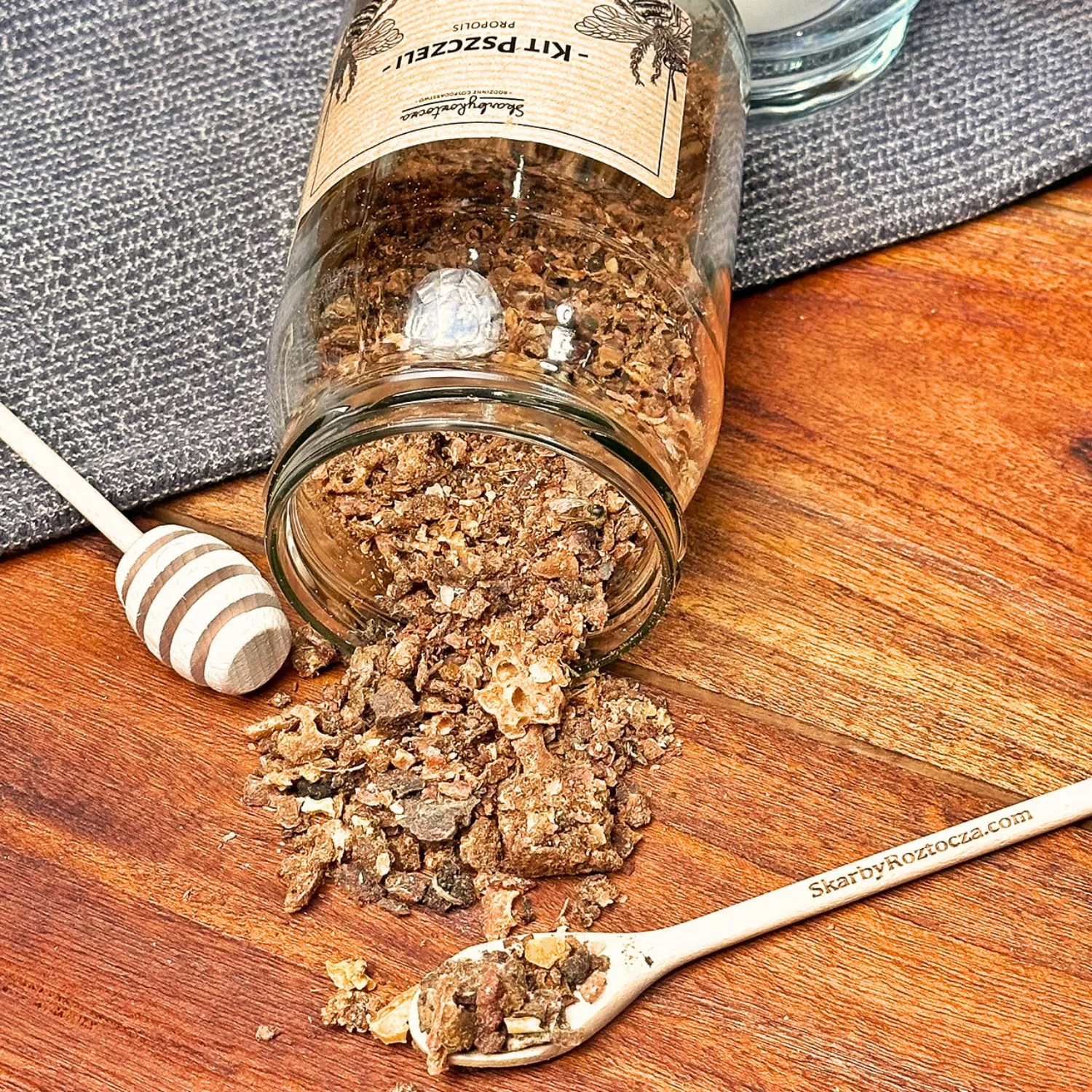
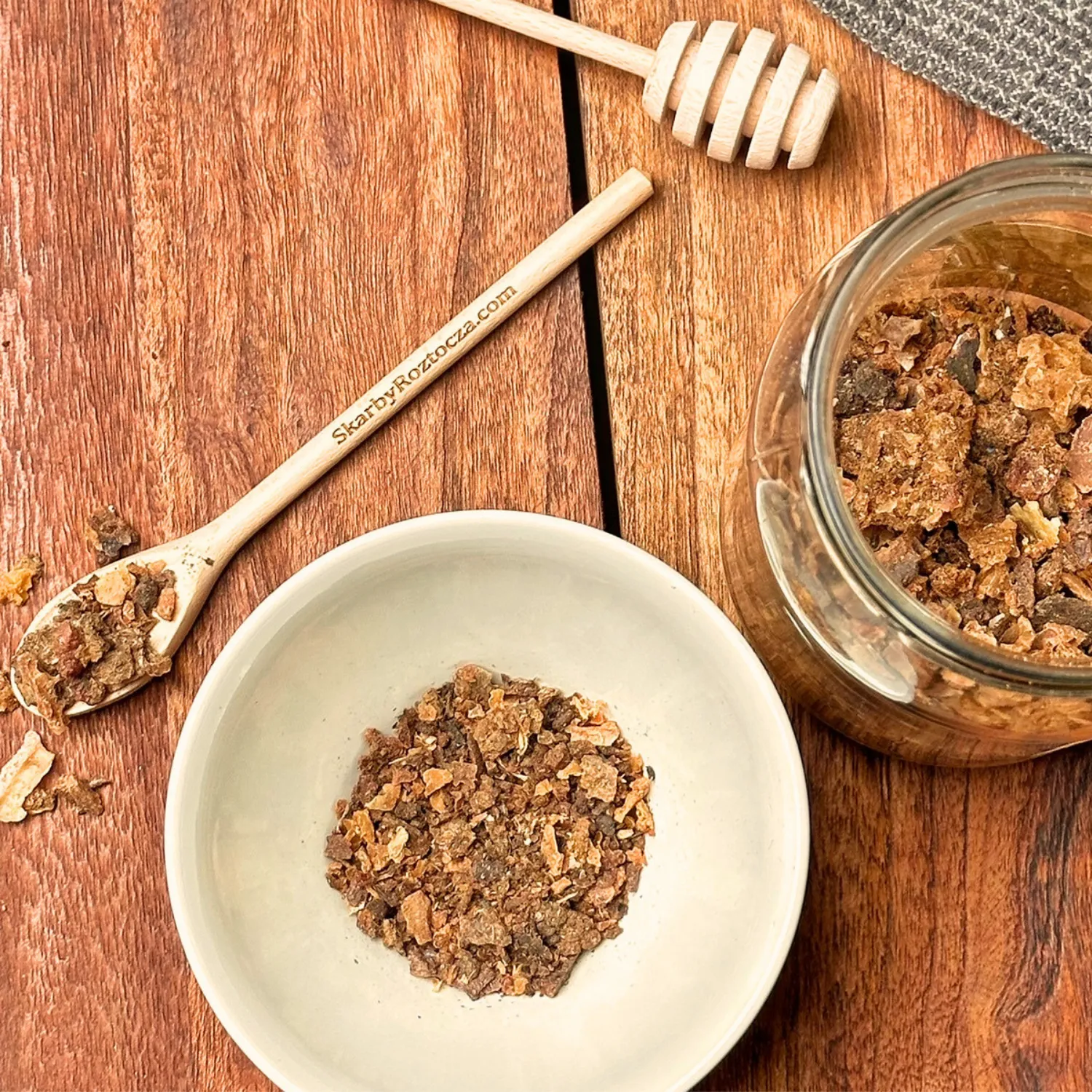
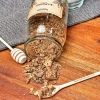
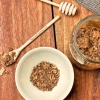
The most popular method of harvesting bee glue from the hive is scraping. Most often it is a by-product of apiary work and of cleaning glued-up frames, boxes or other parts of the hive. Bee glue / propolis obtained this way will contain natural inclusions in the form of beeswax and even solid particles such as wood shavings from the hive or frames. Such raw bee glue may also contain minimal amounts of acarological, entomological and microbiological matter, which is connected with the natural function of this product in the hive.
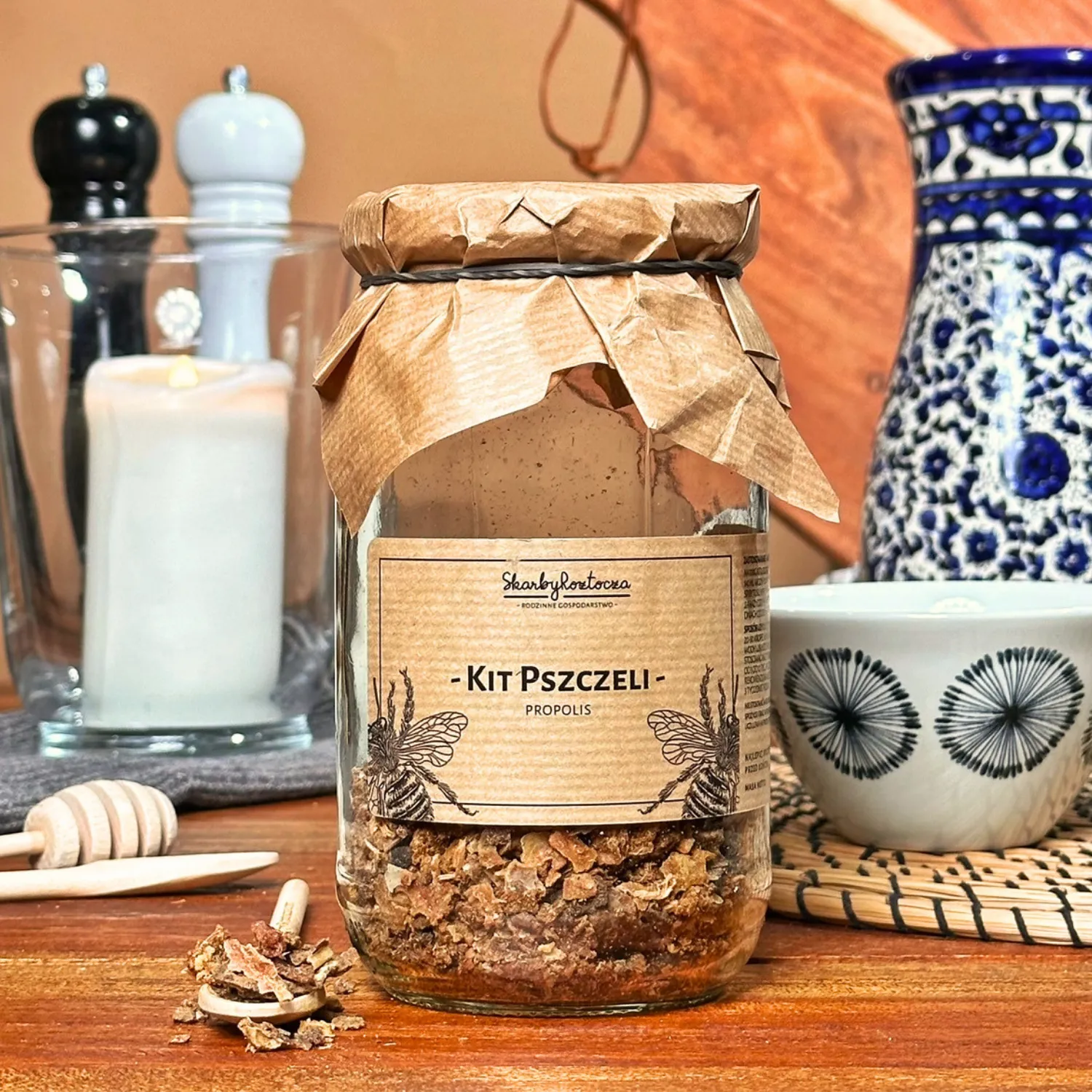
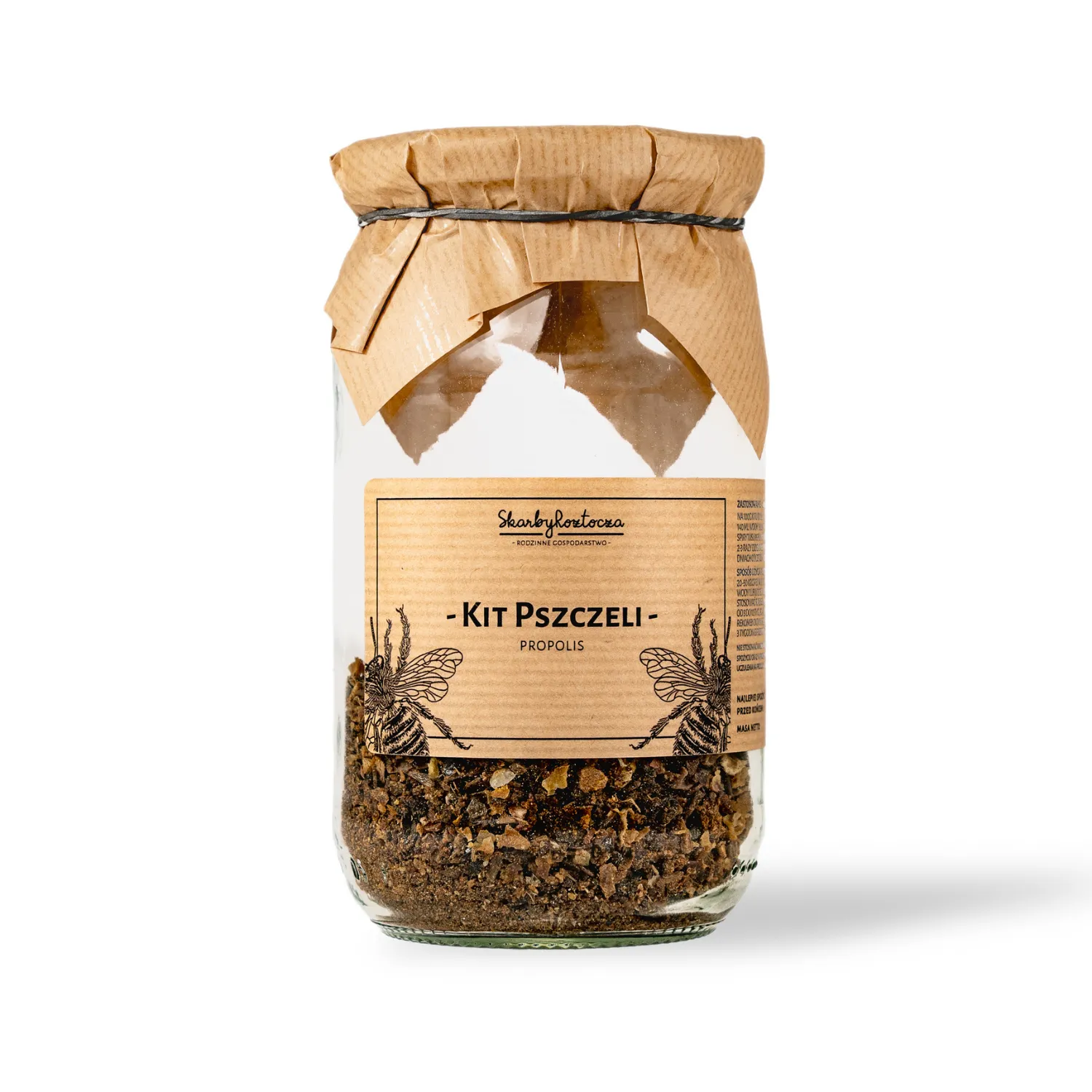
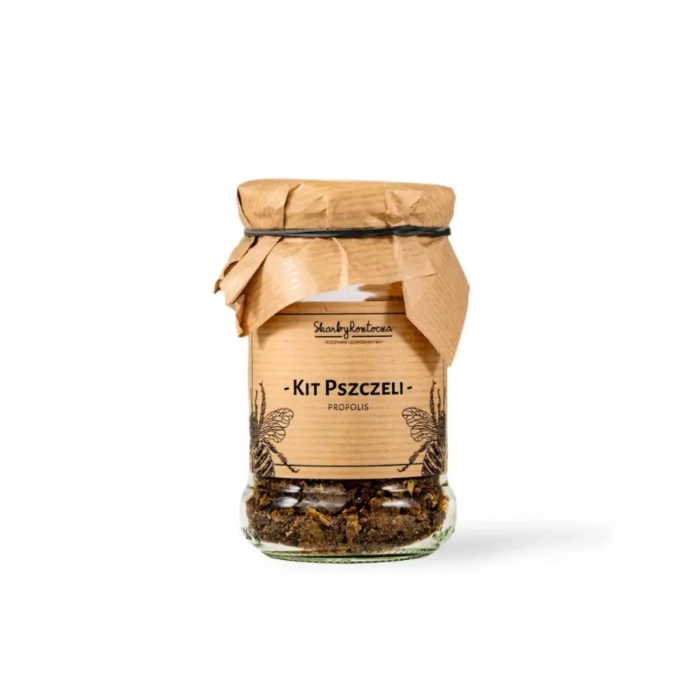
Before being packed, bee glue obtained in this way iscleaned of larger impurities, but smaller particles and those containing propolis are left in, because raw material obtained this way makes a quality base for producing a propolis extract from it. We call the bee glue / propolis we offer an unrefined product, and the minimal amounts of wood or wax testify to its natural origin and the way it is harvested.

Why choose our bee glue?
- Polish Product - support Polish beekeeping and enjoy a guarantee of product safety.
- Raw and unprocessed - perfect for making your own propolis tincture.
- High quality - it contains over 50% soluble substances.
- Convenient packaging - we supply the product in a larger jar, ideal for making a propolis tincture.
- Safe delivery - we have many years of experience in safely shipping glass products and we guarantee safe delivery.
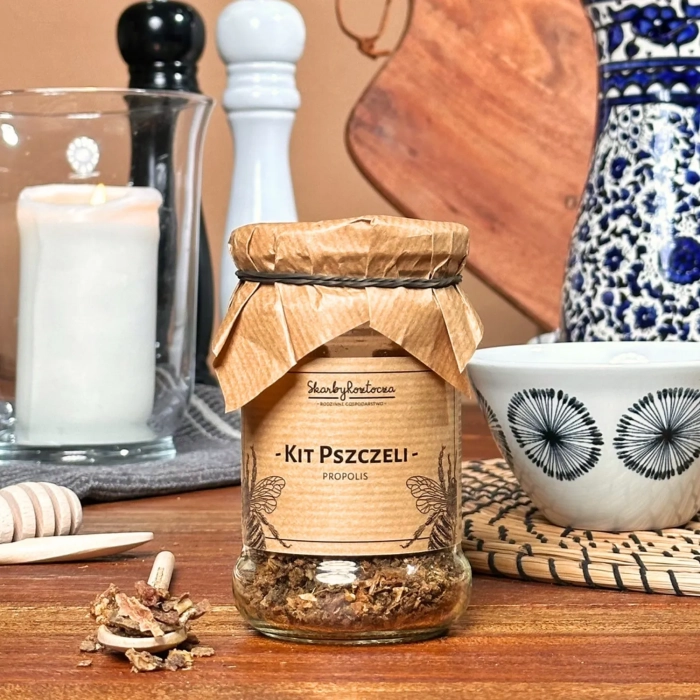
- It comes with preparation instructions - the product label carries a ready recipe with the proportions for making the tincture.
Propolis / bee glue - a wealth of active ingredients.
The composition of propolis, which includes lipid and wax compounds, vitamins, minerals and flavonoids, depends on the region where the bees produce it and on the season, and even the breed of bee has a significant effect on its properties. In the composition of propolis / bee glue, over 300 active substances have been identified, including:
- Resinous and balsamic substances - they make up the main part of propolis and are collected from buds and damaged parts of plants.
- Beeswax - it makes up the bulk of propolis.
- Flavonoids - these compounds have strong antioxidant, anti-inflammatory and antibacterial effects.
- Phenols and phenolic acids - they are responsible for its antiseptic and anti-inflammatory properties.
- Vitamins - propolis contains vitamins B, C, D and E.
- Minerals - it contains, among others, magnesium, calcium, potassium, sodium, zinc, iron, copper and silicon.
- Essential oils - they give propolis its distinctive smell and have an antibacterial effect.
Propolis / bee glue - what does it help with?
Thanks to such a rich composition, propolis displays a range of health-promoting properties:
- It supports immunity - thanks to its content of vitamins and minerals, propolis strengthens the immune system.
- It has an antioxidant effect - the flavonoids, phenols and phenolic acids it contains fight free radicals, protecting cells against damage and inflammation.
- It has antiseptic properties - essential oils and other active compounds help fight bacteria, viruses and fungi.
- It affects general well-being - the presence of vitamins B, D and E supports the functioning of the nervous system and contributes to better well-being.
Bee glue / propolis - how to use it?
We offer our bee glue in jars ready for making a propolis tincture – and it is the propolis tincture made from bee glue that is commonly called propolis. Simply pour the appropriate amount of water and spirit over the contents of the jar according to the recipe on the product label, so as to make the best use of the health properties of this bee product.
For a 50 g jar of bee glue, the propolis tincture is prepared as follows:
Ingredients for a propolis tincture:
- 50 g of bee glue
- 200 ml of 95% rectified spirit
- 55 ml of water (boiled or spring water)
Preparing the propolis tincture:
- Pour the water into our ready 50 g jar of bee glue.
- Add the spirit to the resulting solution.
- Leave for 14 days in a sealed container in a dark, cool place, mixing by shaking 2-3 times a day.
- After 2 weeks, separate the dark brown liquid from the sediment by pouring the solution through gauze (preferably doubled).
- Store the resulting propolis tincture in a dark glass bottle.
The propolis sediment left after straining the tincture can be used as a compress for rheumatic and joint pain, having first covered the area with a rich cream


How to use a propolis tincture - propolis:
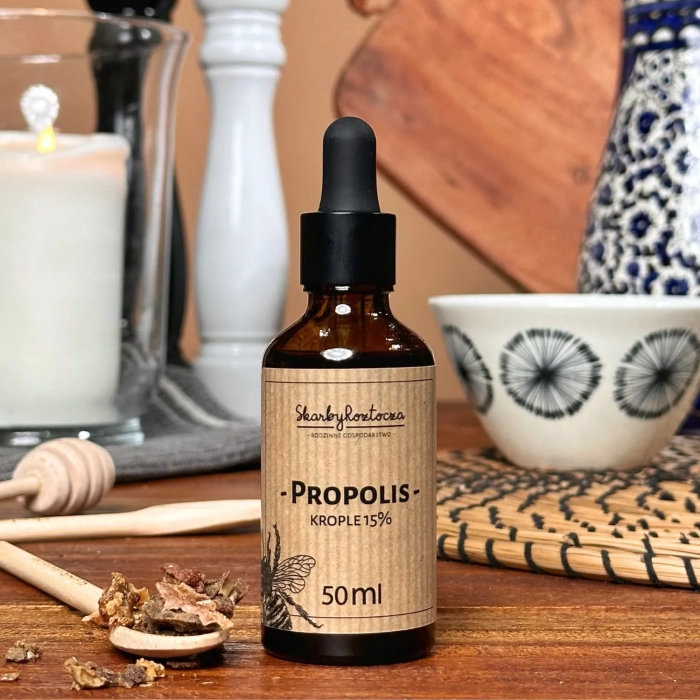
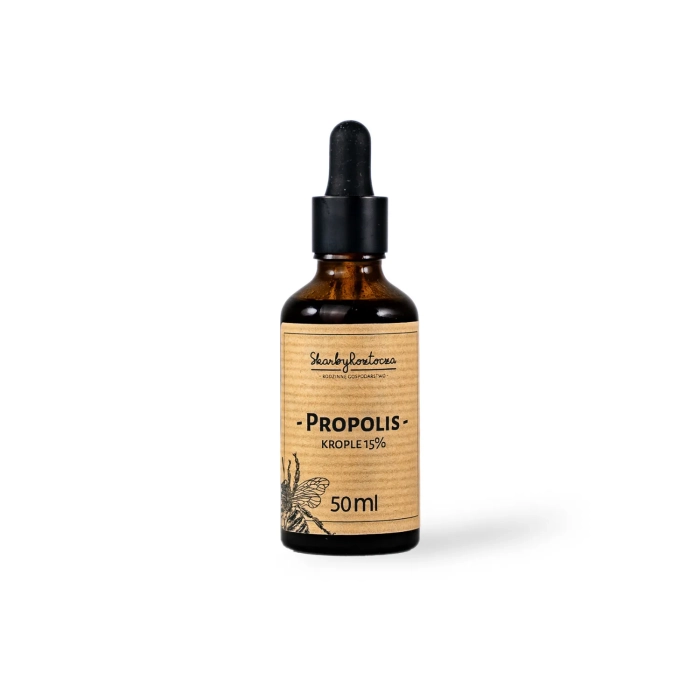
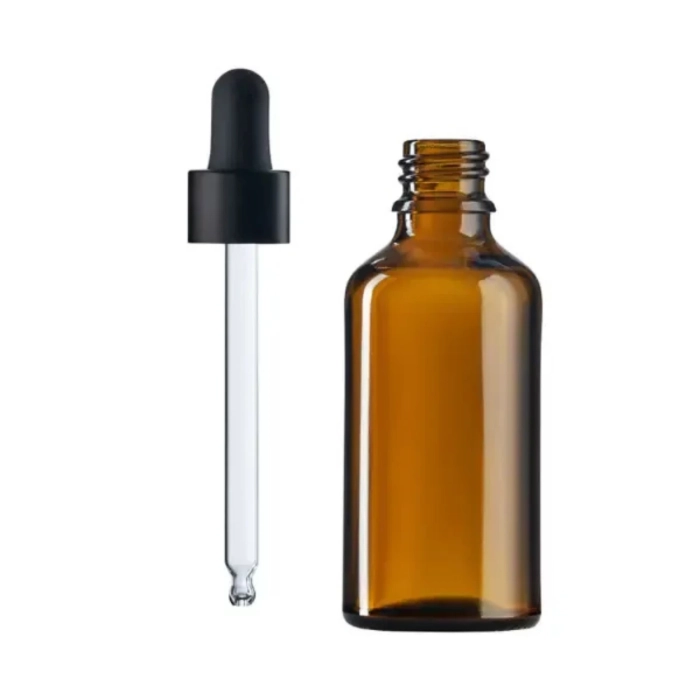
METHOD 1. Internally - We recommend taking 20-50 drops of the preparation (about 1/2 a teaspoon, or use a bottle with a pipette), dissolved on a spoonful of honey or in a small amount of water, ~50 ml (e.g. a shot glass). Take it from once up to a maximum of three times a day. Propolis is a natural product and cannot be overdosed, but because of its alcohol content the recommended dose should not be exceeded.
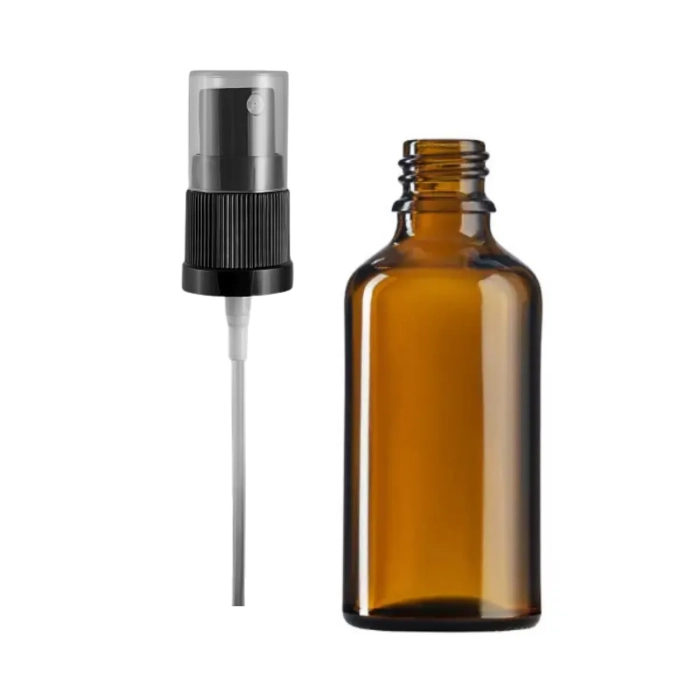
METHOD 2. Externally - Propolis can be applied externally to the skin, e.g. by transferring it into a spray bottle, to support the healing of wounds, burns and skin lesions, and in treating fungal infections and eczema. The anti-inflammatory and antibacterial properties of propolis speed up tissue regeneration and protect the skin against infection.
Propolis treatments should last from 3 to 12 weeks – after that time a 3-week break is recommended. The raw material should not be used directly.
The shelf life of propolis:
It is recommended that propolis / bee glue as a raw material be used within a year of harvesting, because after that time its activity begins to decline. A prepared propolis tincture is likewise best used up within 12 months of the date it was made. It is estimated that after about 12 months propolis loses half of its properties, and after two years it becomes a product of little value. Storing propolis in a cool, dry, shaded place will preserve all its qualities for longer, so it is worth finding the best possible spot for this treasure from the hive.
Bee glue / propolis for children - how to use it?
Bee glue is a resinous substance and alcohol is needed to make a propolis tincture from it, which is why opinions on giving propolis to children are divided. Some allow small amounts to be taken by children because of its invaluable health properties, while others believe that, because of the alcohol, propolis should only be given to people aged 18 and over. In any case it must be remembered that propolis has a strong bactericidal action and can be harmful if given in excessive amounts. We recommend using the tincture with children especially at times of falling immunity, infections, flu and colds, in doses of no more than 10 drops twice a day and for no longer than 14 days.
An alternative to propolis for children can be glycol-based propolis extracts. Glycol also belongs to the group of alcohols and is safe for children and drivers alike. We encourage you to discover our propolis drops made with glycol.
Propolis / bee glue during pregnancy
Because there is insufficient research on the safety of using propolis preparations, because of the potential risk of allergic reactions and because of the alcohol content of the extracts, it is recommended that pregnant women consult a doctor before starting to use propolis


Propolis, pollen or bee bread - the differences
Propolis, also known as bee glue, is a natural antibiotic that works especially well during illness and in fighting infections. It will also help in treating wounds thanks to its antiseptic properties. Flower pollen is a natural multivitamin. It works as a daily form of supplementation and of building the body’s immunity, to prevent infections and dips in immunity. Flower pollen, however, has the lowest absorption of the bee products mentioned, so using it properly and regularly is especially important in order to achieve the best results. Bee bread, in turn, is a highly absorbable derivative of flower pollen. It has a richer composition and better absorption. It is excellent when we need a quick recovery after illness or surgery.Propolis - contraindications and side effects
Remember! Propolis, like other bee products, can cause allergic reactions. Because of the wax and resins it contains, which our body does not digest, it should not be eaten raw. It is most often used in the form of an extract.
Before using it for the first time, it is worth carrying out an allergy test – apply a little of the preparation to a small patch of skin and check the reaction. If you plan to take it internally, start with a minimal dose (a few drops dissolved in water) and observe your body.
If symptoms such as a runny nose, a rash, a headache, nausea or diarrhoea appear – stop using it immediately and consult a doctor. Particular care should be taken by people allergic to bee products or to plant pollens, which are a natural component of propolis. Before beginning a treatment with bee products, consulting a doctor is always recommended. Propolis is a natural product, so its colour, smell and consistency may differ slightly from batch to batch. Because of its wax and resin content, propolis often clumps together, which is a natural phenomenon. Bee glue is harvested in a craft manner, so the product may contain natural inclusions such as particles of wax, fragments of wood from the hive or other parts of it. The presence of minor microbiological matter is also natural, since propolis performs a protective function in the hive. The features described are not defects – they testify to the natural origin of the product.
Name: propolis / bee glue
Ingredients: 100% propolis / bee glue - unrefined
Aroma: intense, resinous, distinctive
Taste: bitter, tart
Storage: in a sealed container, in a dry and shaded place (temp. 8-18°C)
Net weight: 100 g
Year: 2026
Best before end of: 2 years, date marked on the packaging
Country of origin: Poland
Bibliography / Sources: (click to expand)
- Kędzia, B. The origin of propolis in the light of theory and scientific research. The origin of propolis in the theories and scientific research. Herba Pol. 2008, 54, 179–186.
- Department of Medical Microbiology, Antibacterial Properties of Propolis, Poznań University of Medical Sciences. Molecules 2019
- Niedworok J., Kubiak S., Wiaderny J., The properties and medicinal use of propolis. Part II. Wiadomości Zielarskie 1994; 6: 14-15
- Mroczek JR. Medicinal and nutritional properties of bee products. Wiadomości Zielarskie 2002; 9: 11–12
- PAP, Nauka w Polsce, “Prof. Maria Borawska: Bee products help in the treatment of brain gliomas.” 05/2015
- Ciborowska H., Rudnicka A.: Dietetics – nutrition of the healthy and the sick. Warsaw, Wydawnictwo Lekarskie PZWL 2014: 30-90
- Article on the medicare.pl portal - https://www.medicare.pl/artykuly/propolis-zastosowanie-i-wlasciwosci-kitu-pszczelego.html
-
Elżbieta Hołderna-Kędzia - The antibacterial action of ethanol extracts of propolis (EEP)
- Wikipedia - article: https://pl.wikipedia.org/wiki/Kit_pszczeli
The description above has been prepared on the basis of the sources indicated: articles, books, journals, scientific sources, as well as our best knowledge and experience. In accordance with Regulation (EU) No 1169/2011 of the European Parliament and of the Council of 25 October 2011, and with all consumer requirements and regulations concerning food products, we do not attribute any particular medicinal properties to our products, nor do we suggest that they have such properties; we merely indicate the possible ways of using them, without any guarantee of effectiveness.
Reviews
If you've added a review and it doesn't appear on the list, it may be pending moderation.
Leave feedback on the product

International shipping
starting at just €9.

Discover thousands of positive reviews.

Choose wisely and
support local beekeeping.

Collect virtual bees
and exchange them for honey.
Choose our honeys
Peek into our sweet world and find out why customers choose our products.
Bestsellers
-
Price €12.50
-
Price €16.25
-
Price €16.25
-
Price €49.75
-
Price €12.50
-
Price €17.50
-
Price €16.25
-
Price €16.25
-
Price €22.50
-
Price €16.25
-
Price €16.25
-
Price €16.25
-
Price €30.00
-
Price €16.25