
List of products
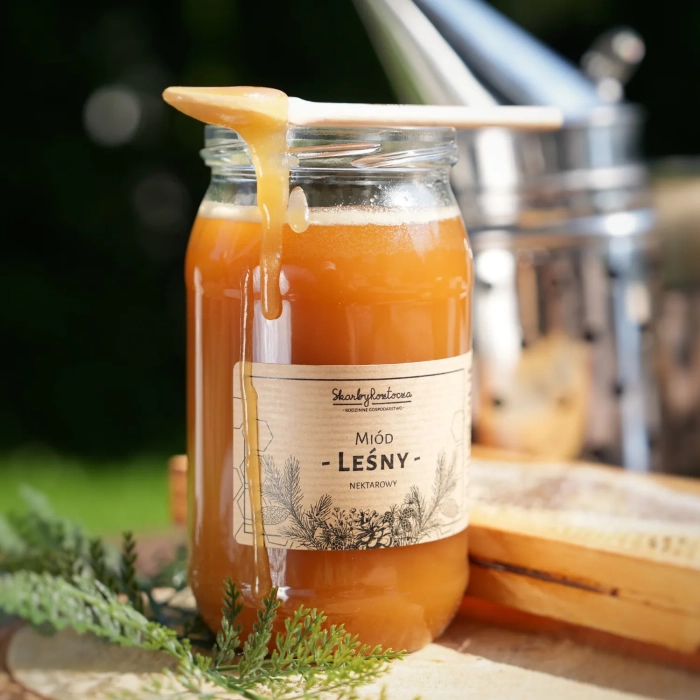
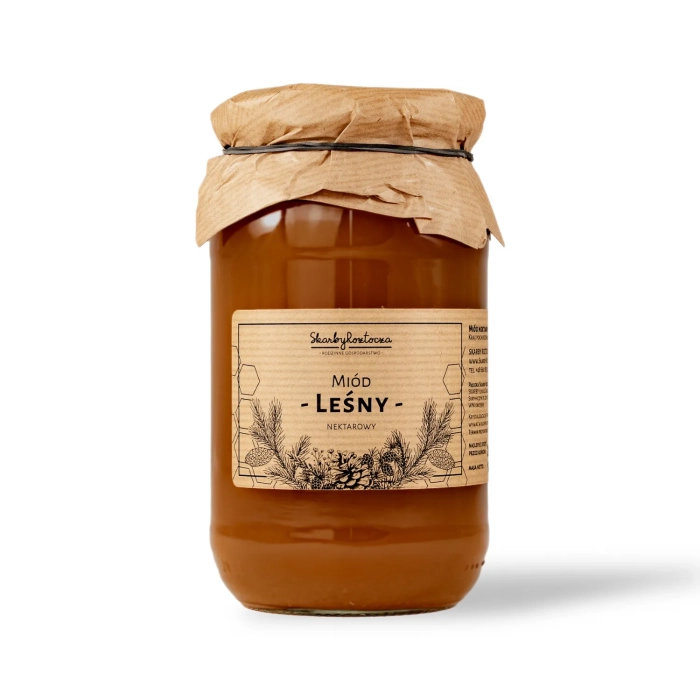
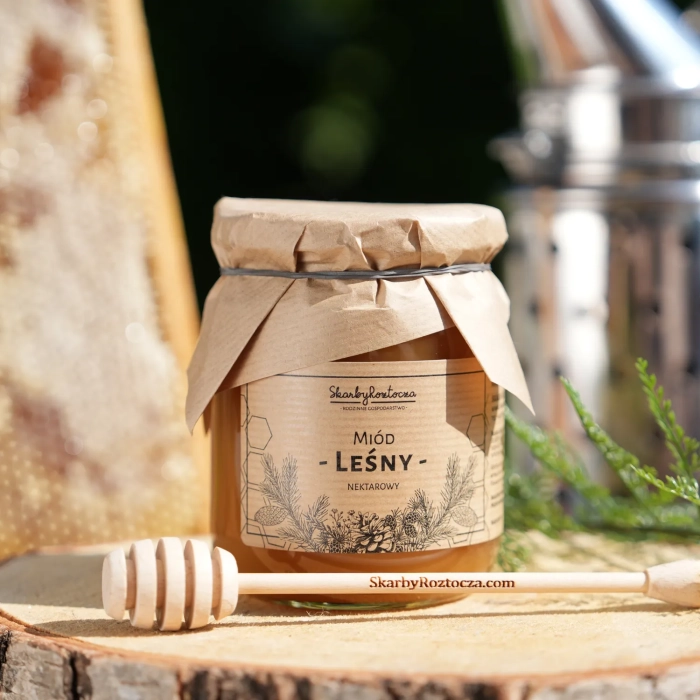
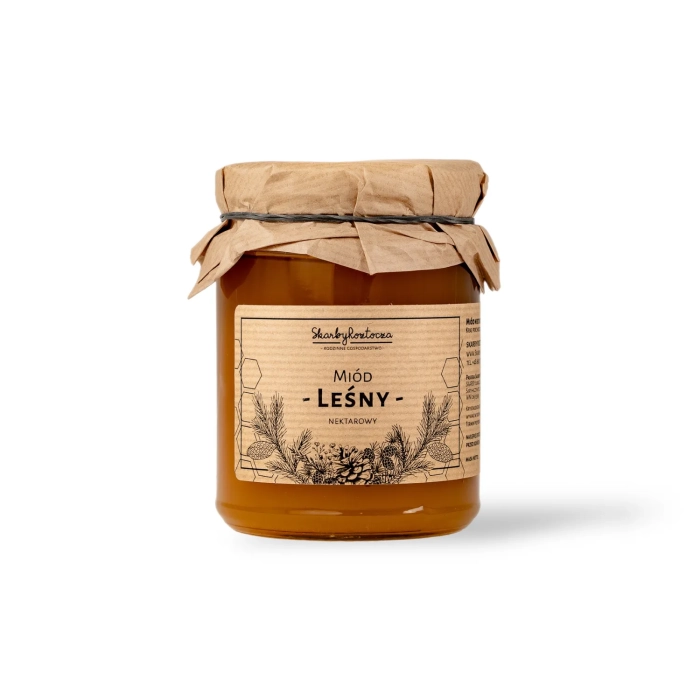
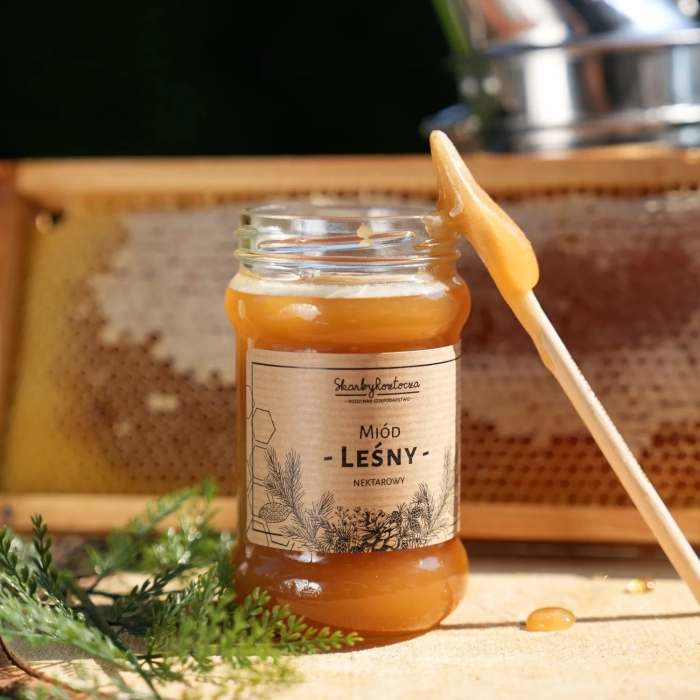
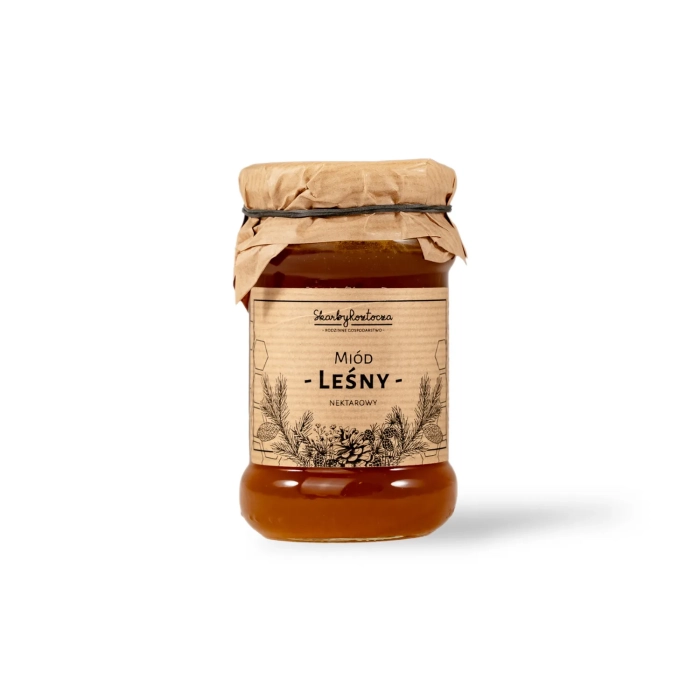
Forest Honey
Forest Honey - as the name suggests, forest honey is a product made from plants growing wild in forest areas - coniferous and deciduous trees and forest floor plants. Forest honey is made from the nectar of various melliferous plants, such as blackberry, raspberry, blueberry, lime, chamomile and wild rose, as well as from deciduous or coniferous honeydew. The color of forest honey depends on the given harvest, i.e. when and from which flowers the bees collected the nectar. This means that forest honeys from our apiaries may be slightly different from each harvest, and this is by no means their disadvantage. :) We usually offer spring forest honey (usually slightly lighter) and autumn forest honey (darker due to the higher content of honeydew, also called nectar-honeydew honey).
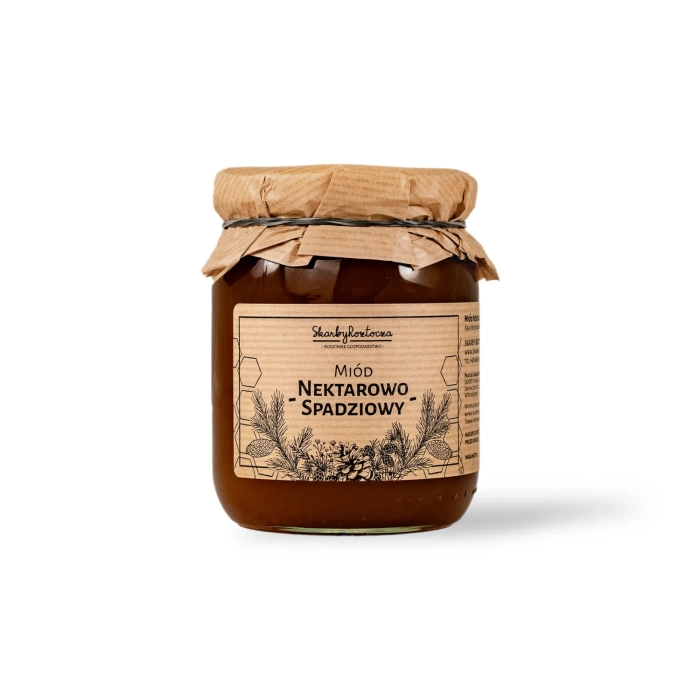
Honey from forest areas
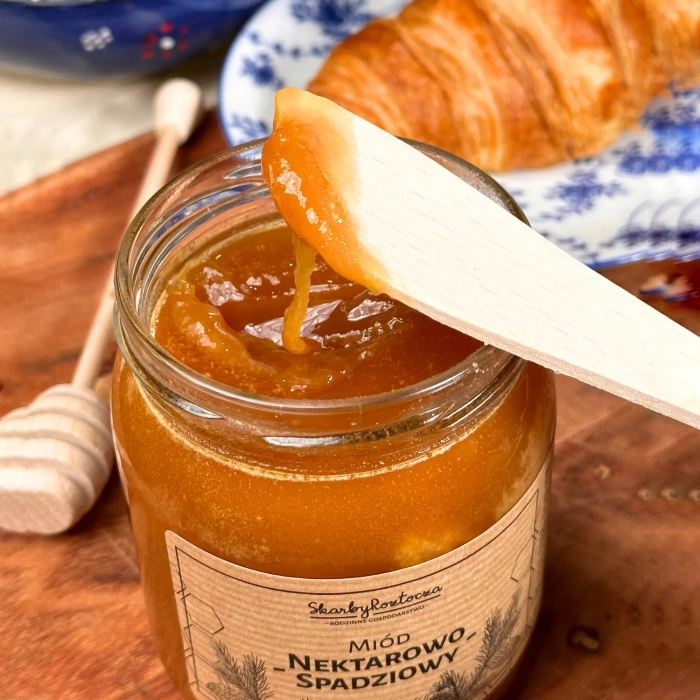
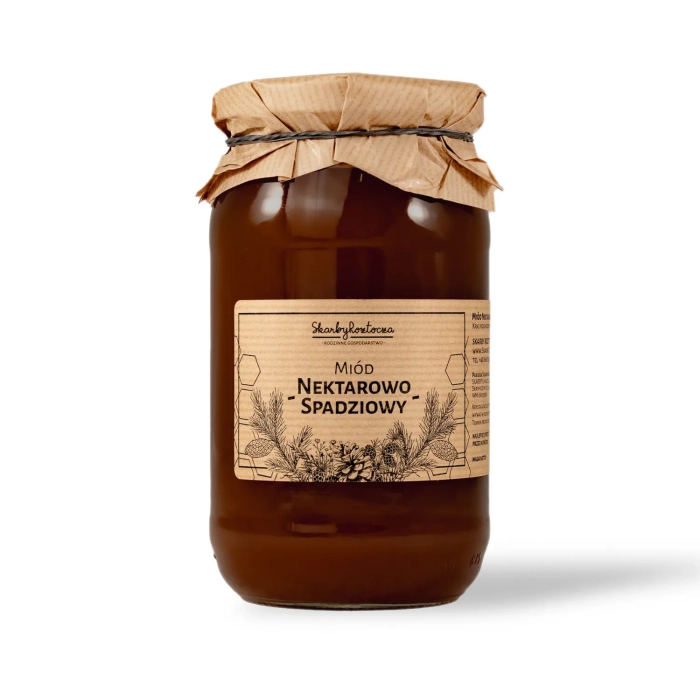
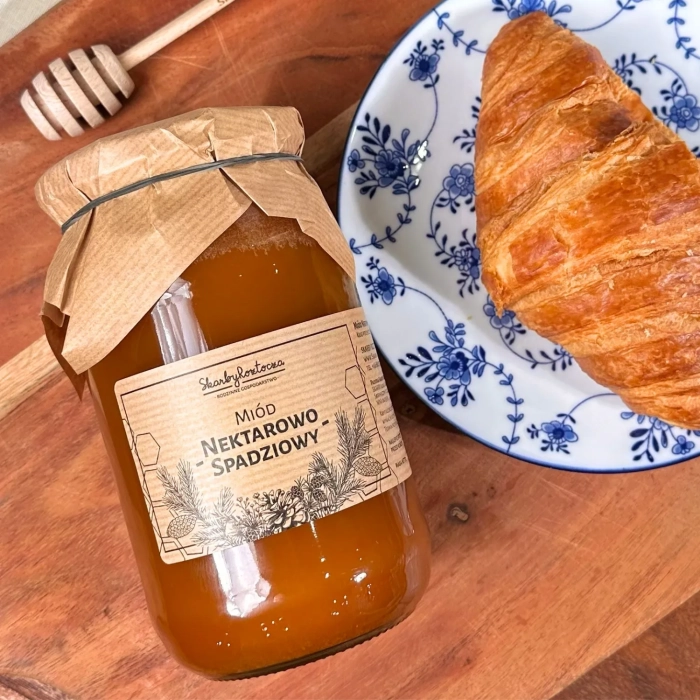
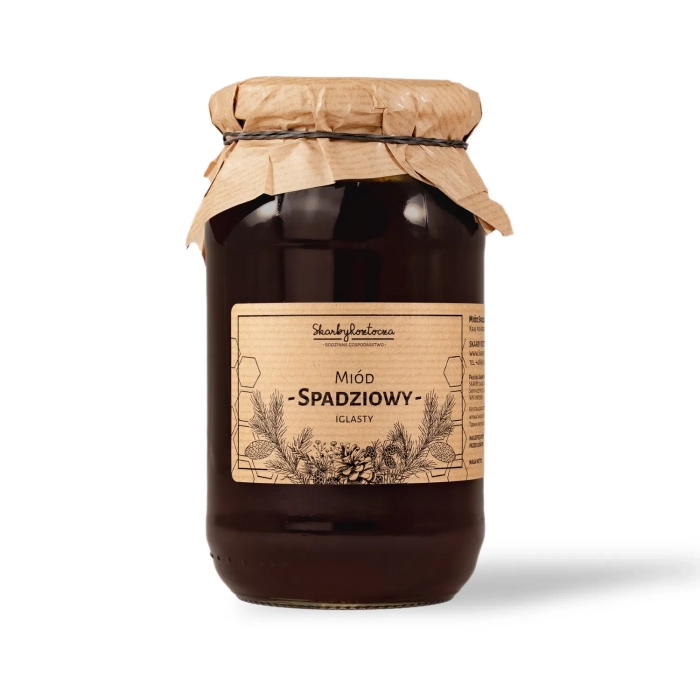
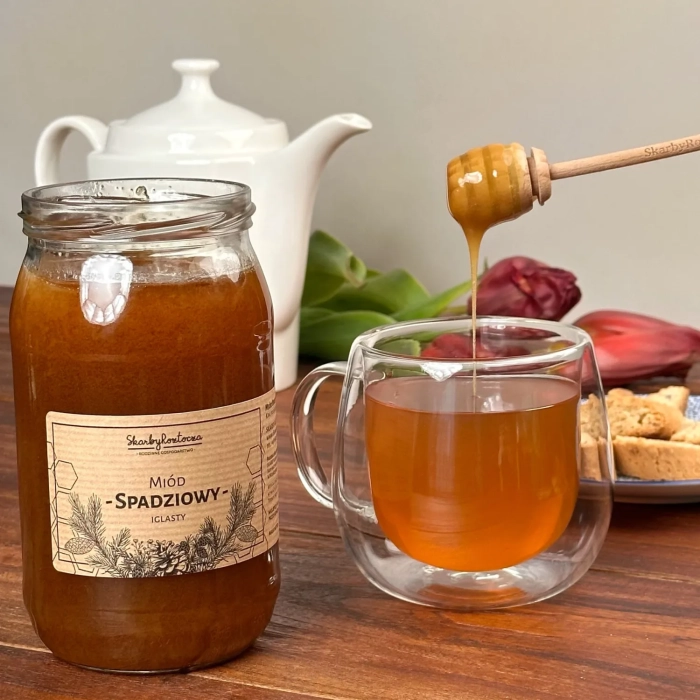
Autumn forest honey (also called honey from forest areas ) is a nectar-honeydew honey. The content of coniferous or deciduous honeydew has a significant impact on the color, taste and properties of forest honey - from forest areas . For us, this is one of our favorite honeys - due to the aromatic taste of needles and the sweet taste of nectar from the forest floor. It is characterized by a dark yellow to red-brown color depending on the forest stand from which it is obtained. Honeys from forest areas are denser than nectar and contain more mineral compounds, especially: potassium, phosphorus, chlorine, sulfur, calcium, magnesium and iron.
Forest honeys - how are they made?
It is worth mentioning that our forest honeys are mainly created when the apiary located in the forest is focused on the production of honeydew honey. However, as is commonly known, it is one of the most difficult honeys to produce. Therefore, when honeydew does not dominate in the honey from the forest apiary, and the bees bring nectar from other plants of the forest floor, the honey is called forest honey . Another type of desirable forest nectar is heather - whenever we fail to obtain pure heather honey - we call the honey forest-heather due to the content of forest floor nectar.
What does Forest Honey help with? Application of forest honey.
- It has a bactericidal effect.
- Helps in the treatment of skin diseases.
- Increases the body's immunity and condition.
- It is worth consuming in case of heart diseases and circulatory system problems.
- Forest honey can be used every day as a healthy substitute for white sugar.
Forest Honey properties:
Color: In liquid form it can be light or dark amber, but over time forest honey fades. After crystallization it becomes slightly golden, sometimes it can be gray-yellow.
Taste: Sweet, slightly resinous taste, with a hint of aromatic herbs.
Fragrance: Intense fragrance, and its scent brings to mind forest glades.
Storage: Dry and shaded place (temp. 8-18 C)
Flowering time: June/September
Crystallization: Medium crystallization
Forest honey owes its properties to all the nectars and honeydews that make up its composition. Its structure allows for honey with a wide range of health properties.
Bibliography/Sources:
- Jasicka-Misiak I., Kafarski P.: CHEMICAL MARKERS OF VARIETARY HONEYS. Chemical news. 2011, 65, 9-10.
- Celina Pieszko, Janetta Grabowska, Nina Jurek DETERMINATION OF POLYPHENOLS AND SELECTED ELEMENTS IN COFFEE, TEA AND HONEY*) Department of Inorganic, Analytical Chemistry and Electrochemistry of the Silesian University of Technology in Gliwice Head of Department: prof. dr hab. inż. M. Turek
- Wojtas E, Jakubaszek W. (2006) Bean honey, Biłgoraj dumpling and sękacz cake, "Smak i Tradycja", 2, pp. 7–9.
- Majewska E. et al.: PHYSICOCHEMICAL QUALITY FEATURES OF SELECTED NECTAR HONEYS. BROMAT. CHEM. TOXICOL. – XLVIII, 2015, 3, pp. 440 – 444.
- Janda K., Bąkowska M.: Health-promoting properties of selected honeys. Pomeranian Journal of Life Sciences. 64.
- Portal Eat Honey
- MEDONET portal: https://zyczenie.medonet.pl/produkty-spozywcza/substancje-slodzace/miod-fasolowy-wlasciwosci-jak-wplywa-na-zdrowie/e0mfg3l
- HEALTH INTERIA Portal: https://zdrowie.interia.pl/diety/news-polski-przeciwnik-miodu-manuka-dobry-dla-serca-zalecany-prz,nId,7126709
Choose our honeys
Peek into our sweet world and find out why customers choose our products.
Bestsellers
-
Price €12.50
-
Price €16.25
-
Price €16.25
-
Price €49.75
-
Price €12.50
-
Price €17.50
-
Price €16.25
-
Price €16.25
-
Price €22.50
-
Price €16.25
-
Price €16.25
-
Price €16.25
-
Price €30.00
-
Price €16.25


International shipping
starting at just €9.
Discover thousands of positive reviews.

Choose wisely and
support local beekeeping.

Collect virtual bees
and exchange them for honey.