

List of products
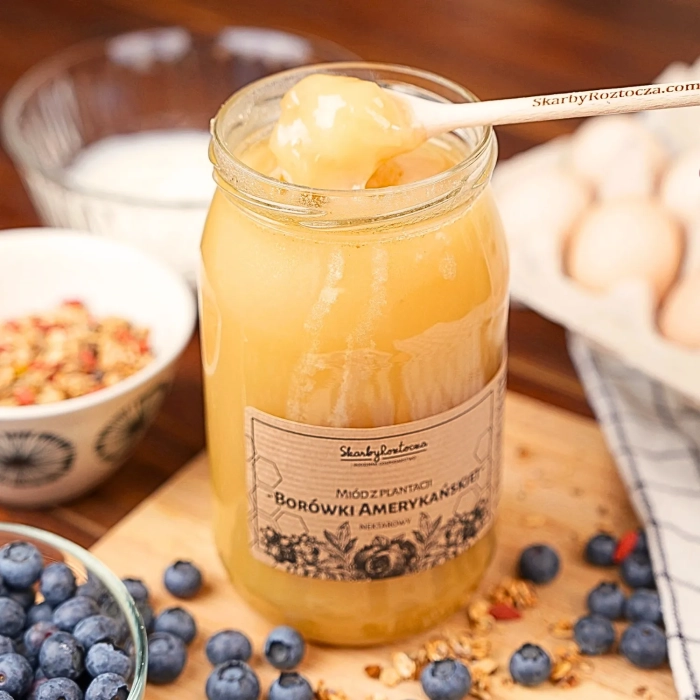
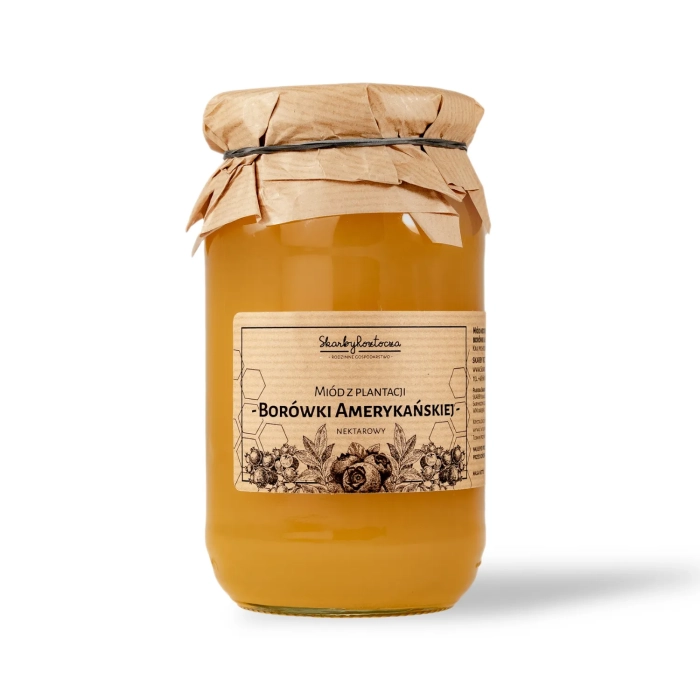
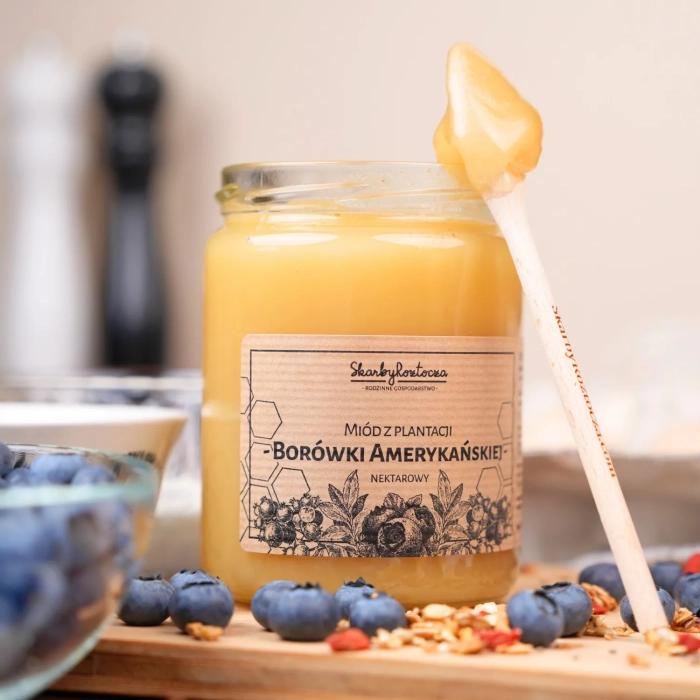
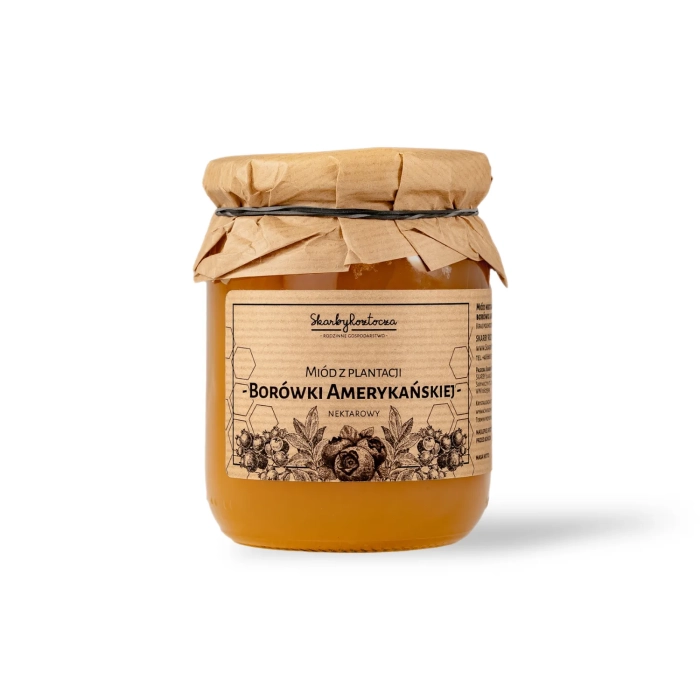

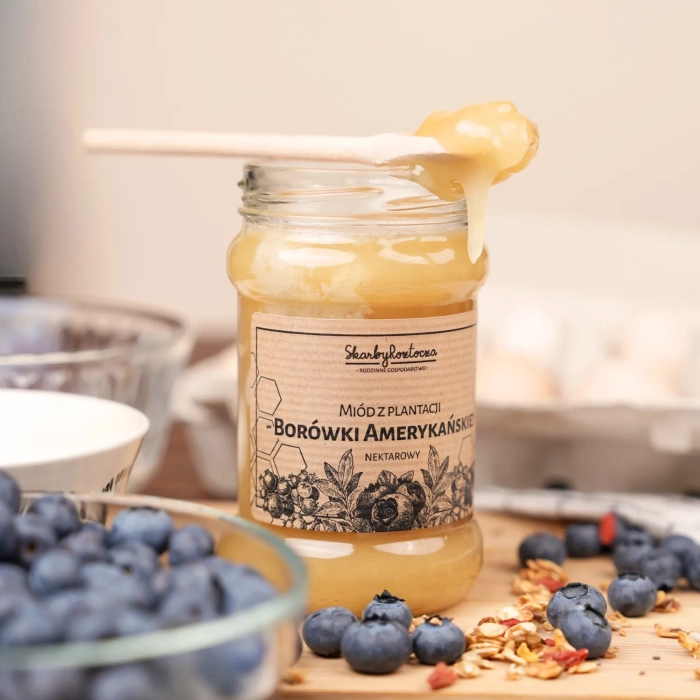
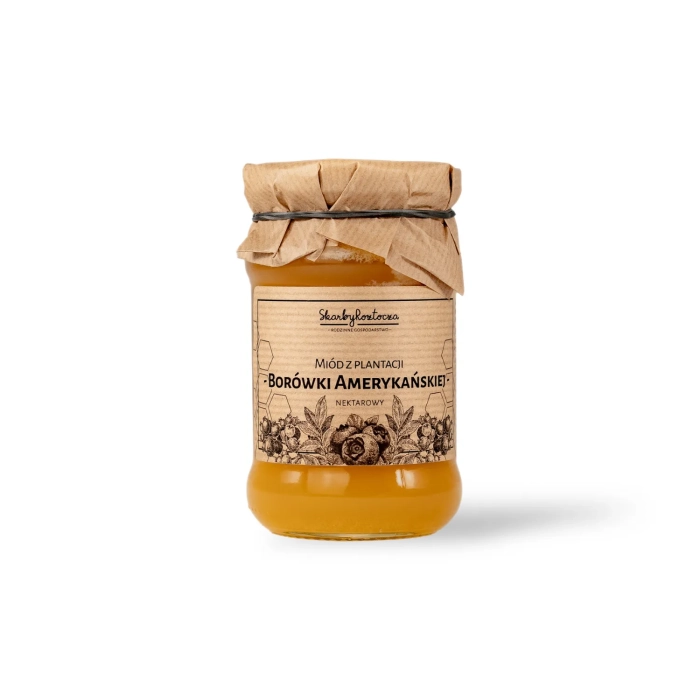
Blueberry Honey is a unique nectar honey collected from an apiary located on a blueberry plantation. Considered by many to be the tastiest honey.
The benefit for blueberry honey is the American blueberry, also known as the highbush blueberry, a cousin of the black forest berry. Its dark blue fruit is valued all over the world not only for its taste, but also for its exceptionally beneficial effect on the body - that is why we place our hives directly on American blueberry plantations to benefit from the properties of the blueberry and obtain unique blueberry honey in cooperation with our bees.
Blueberry Honey properties:
- Protects against cancer.
- Improves eyesight.
- It has detoxifying properties that cleanse our body.
- Effective in the fight against heart disease.
Color: The color resembles that of a tea infusion.
Taste: Deeply sweet taste, slightly reminiscent of a blueberry aroma.
Smell: Reminiscent of the scent of blueberries.
Storage: Dry and shaded place (temp. 8-18 C)
Flowering time: May
Crystallization: Fast crystallization
Bibliography/Sources:
- Jasicka-Misiak I., Kafarski P.: CHEMICAL MARKERS OF VARIETARY HONEYS. Chemical news. 2011, 65, 9-10.
- Majewska E. et al.: PHYSICOCHEMICAL QUALITY FEATURES OF SELECTED NECTAR HONEYS. BROMAT. CHEM. TOXICOL. – XLVIII, 2015, 3, pp. 440 – 444.
- AI Tikhonov, LA Bondarenko, TG Jarnych, OS Szpyczak, WM Kowal, RI Skrypnik–Tikhonov, National Pharmaceutical University of the Ministry of Healthcare of Ukraine, NATURAL HONEY IN MEDICINE AND PHARMACY ORIGIN, PROPERTIES, APPLICATION, MEDICINAL PREPARATIONS MONOGRAPH, 2017, 33-331
- Beata Madras-Majewska, Gifts from the hive, Podlasie Agricultural Advisory Center in Szepietowo, 2023, 3-20
- Janda K., Bąkowska M.: Health-promoting properties of selected honeys. Pomeranian Journal of Life Sciences. 64.
- Holderna-Kędzia E., Kędzia B., Therapeutic properties of bee honey, Wiadomości Zielarskie, 1996, pp. 8-12
- Przybylska S., Honey, a precious gift of nature. Nutritional and medicinal properties of honey. Food Safety and Hygiene. 2011, pp.52-53
Choose our honeys
Peek into our sweet world and find out why customers choose our products.
Bestsellers
-
Price €12.50
-
Price €16.25
-
Price €16.25
-
Price €49.75
-
Price €12.50
-
Price €17.50
-
Price €16.25
-
Price €16.25
-
Price €22.50
-
Price €16.25
-
Price €16.25
-
Price €16.25
-
Price €30.00
-
Price €16.25


International shipping
starting at just €9.

Discover thousands of positive reviews.

Choose wisely and
support local beekeeping.

Collect virtual bees
and exchange them for honey.