 Shop
Shop
3
2
1
0
Get to know our bee products straight from the apiary: bee bread, pollen and propolis (bee glue).
Flower pollen - 1kg
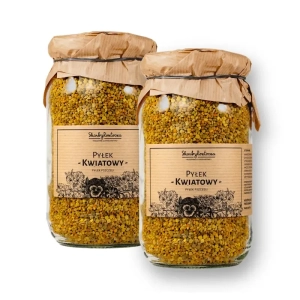
Pollen is collected by bees from blooming flowers of plants and trees, then mixed with a small amount of their saliva or nectar and then formed into balls, it is carried on their legs to the hive. When flying into the hive, the bee passes through the so-called bottom pollen catcher, where the pollen loads are precipitated onto a tray, from which the beekeeper later obtains this bee treasure.
Fresh pollen itself contains approx. 35% water after collection, so in order to protect it from mold, excess water should be removed by drying - this process takes approx. 3-4 days until the water content is at least 6%. The next step is pollen purification - pollen naturally contains small impurities from the hive such as wax, parts of bees or small grass elements, so it is carefully sifted on sieves and winnowed on a winnowing machine to obtain the purest raw material possible. The last stage involves a 2-3 day freezing process at -18 degrees Celsius, which has antibacterial functions and protects it from microorganisms.
Depending on the plant the pollen comes from , its surface may be rough, hooked or sticky, etc. The colour of bee pollen also varies depending on the flowers from which it is collected. It is mainly yellow and in shades of this colour, but naturally, darker pollens may also appear in the pollen, such as blue phacelia, dark pollen grains from gooseberries or black pollen beds from poppies. Colour also has an impact on taste, because spring pollens tend to be soft, light and delicate in taste, while the further into the season it takes on many colours, and their grains tend to be darker, harder and bitter in taste, but it is their biological diversity that guarantees the richness of so many beneficial micro and macro elements.
Availability: running out
Dispatched within: 48 h
Flower pollen - 500g
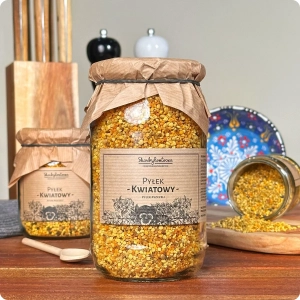
Pollen is collected by bees from blooming flowers of plants and trees, then mixed with a small amount of their saliva or nectar and then formed into balls, it is carried on their legs to the hive. When flying into the hive, the bee passes through the so-called bottom pollen catcher, where the pollen loads are precipitated onto a tray, from which the beekeeper later obtains this bee treasure.
Fresh pollen itself contains approx. 35% water after collection, so in order to protect it from mold, excess water should be removed by drying - this process takes approx. 3-4 days until the water content is at least 6%. The next step is pollen purification - pollen naturally contains small impurities from the hive such as wax, parts of bees or small grass elements, so it is carefully sifted on sieves and winnowed on a winnowing machine to obtain the purest raw material possible. The last stage involves a 2-3 day freezing process at -18 degrees Celsius, which has antibacterial functions and protects it from microorganisms.
Depending on the plant the pollen comes from , its surface may be rough, hooked or sticky, etc. The colour of bee pollen also varies depending on the flowers from which it is collected. It is mainly yellow and in shades of this colour, but naturally, darker pollens may also appear in the pollen, such as blue phacelia, dark pollen grains from gooseberries or black pollen beds from poppies. Colour also has an impact on taste, because spring pollens tend to be soft, light and delicate in taste, while the further into the season it takes on many colours, and their grains tend to be darker, harder and bitter in taste, but it is their biological diversity that guarantees the richness of so many beneficial micro and macro elements.
Availability: average amount
Dispatched within: 48 h
Flower pollen - 250g
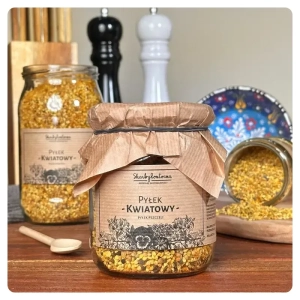
Pollen is collected by bees from blooming flowers of plants and trees, then mixed with a small amount of their saliva or nectar and then formed into balls, it is carried on their legs to the hive. When flying into the hive, the bee passes through the so-called bottom pollen catcher, where the pollen loads are precipitated onto a tray, from which the beekeeper later obtains this bee treasure.
Fresh pollen itself contains approx. 35% water after collection, so in order to protect it from mold, excess water should be removed by drying - this process takes approx. 3-4 days until the water content is at least 6%. The next step is pollen purification - pollen naturally contains small impurities from the hive such as wax, parts of bees or small grass elements, so it is carefully sifted on sieves and winnowed on a winnowing machine to obtain the purest raw material possible. The last stage involves a 2-3 day freezing process at -18 degrees Celsius, which has antibacterial functions and protects it from microorganisms.
Depending on the plant the pollen comes from , its surface may be rough, hooked or sticky, etc. The colour of bee pollen also varies depending on the flowers from which it is collected. It is mainly yellow and in shades of this colour, but naturally, darker pollens may also appear in the pollen, such as blue phacelia, dark pollen grains from gooseberries or black pollen beds from poppies. Colour also has an impact on taste, because spring pollens tend to be soft, light and delicate in taste, while the further into the season it takes on many colours, and their grains tend to be darker, harder and bitter in taste, but it is their biological diversity that guarantees the richness of so many beneficial micro and macro elements.
Availability: running out
Dispatched within: 48 h
Flower pollen - 150g
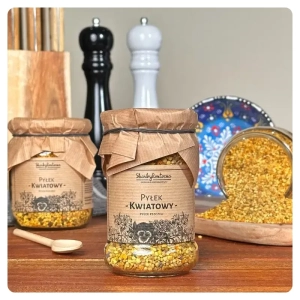
Pollen is collected by bees from blooming flowers of plants and trees, then mixed with a small amount of their saliva or nectar and then formed into balls, it is carried on their legs to the hive. When flying into the hive, the bee passes through the so-called bottom pollen catcher, where the pollen loads are precipitated onto a tray, from which the beekeeper later obtains this bee treasure.
Fresh pollen itself contains approx. 35% water after collection, so in order to protect it from mold, excess water should be removed by drying - this process takes approx. 3-4 days until the water content is at least 6%. The next step is pollen purification - pollen naturally contains small impurities from the hive such as wax, parts of bees or small grass elements, so it is carefully sifted on sieves and winnowed on a winnowing machine to obtain the purest raw material possible. The last stage involves a 2-3 day freezing process at -18 degrees Celsius, which has antibacterial functions and protects it from microorganisms.
Depending on the plant the pollen comes from , its surface may be rough, hooked or sticky, etc. The colour of bee pollen also varies depending on the flowers from which it is collected. It is mainly yellow and in shades of this colour, but naturally, darker pollens may also appear in the pollen, such as blue phacelia, dark pollen grains from gooseberries or black pollen beds from poppies. Colour also has an impact on taste, because spring pollens tend to be soft, light and delicate in taste, while the further into the season it takes on many colours, and their grains tend to be darker, harder and bitter in taste, but it is their biological diversity that guarantees the richness of so many beneficial micro and macro elements.
Availability: running out
Dispatched within: 48 h
Bee bread 1kg + 50g FREE
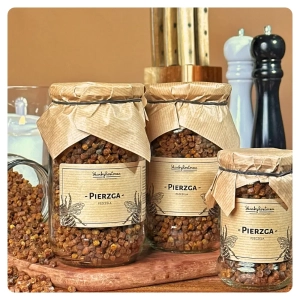
Bee bread is created from pollen brought to the hive by a forager bee, which is not collected by a collector, as is the case with pollen loads offered, but is instead transferred to a worker bee in the hive, who then places it in wax cells in a frame, cleverly stuffing it with her snout. When collecting pollen from flowers, and also during this process, the bees enrich the resulting bee product with enzymes from their salivary glands.
When the cell is almost full, young worker bees add some royal jelly and honey to it, and the whole thing is secured with a thin layer of beeswax. The product prepared in this way, due to the constant temperature in the hive at around 30 degrees Celsius and the tight structure of the cell and the presence of royal jelly, starts the process of lactic fermentation, which refines this product, preserves and enriches the pollen with additional micro- and macro-elements, vitamins, and makes it more digestible.
Availability: out of stock
Bee bread 450g
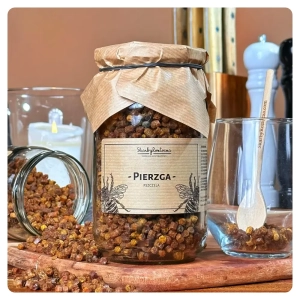
Bee bread is created from pollen brought to the hive by a forager bee, which is not collected by a collector, as is the case with pollen loads offered, but is instead transferred to a worker bee in the hive, who then places it in wax cells in a frame, cleverly stuffing it with her snout. When collecting pollen from flowers, and also during this process, the bees enrich the resulting bee product with enzymes from their salivary glands.
When the cell is almost full, young worker bees add some royal jelly and honey to it, and the whole thing is secured with a thin layer of beeswax. The product prepared in this way, due to the constant temperature in the hive at around 30 degrees Celsius and the tight structure of the cell and the presence of royal jelly, starts the process of lactic fermentation, which refines this product, preserves and enriches the pollen with additional micro- and macro-elements, vitamins, and makes it more digestible.
Availability: average amount
Dispatched within: 48 h
Bee bread 250g
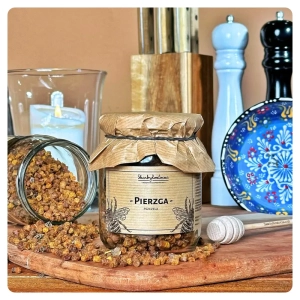
Bee bread is created from pollen brought to the hive by a forager bee, which is not collected by a collector, as is the case with pollen loads offered, but is instead transferred to a worker bee in the hive, who then places it in wax cells in a frame, cleverly stuffing it with her snout. When collecting pollen from flowers, and also during this process, the bees enrich the resulting bee product with enzymes from their salivary glands.
When the cell is almost full, young worker bees add some royal jelly and honey to it, and the whole thing is secured with a thin layer of beeswax. The product prepared in this way, due to the constant temperature in the hive at around 30 degrees Celsius and the tight structure of the cell and the presence of royal jelly, starts the process of lactic fermentation, which refines this product, preserves and enriches the pollen with additional micro- and macro-elements, vitamins, and makes it more digestible.
Availability: running out
Dispatched within: 48 h
Bee bread 150g
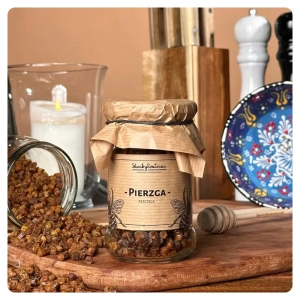
Bee bread is created from pollen brought to the hive by a forager bee, which is not collected by a collector, as is the case with pollen loads offered, but is instead transferred to a worker bee in the hive, who then places it in wax cells in a frame, cleverly stuffing it with her snout. When collecting pollen from flowers, and also during this process, the bees enrich the resulting bee product with enzymes from their salivary glands.
When the cell is almost full, young worker bees add some royal jelly and honey to it, and the whole thing is secured with a thin layer of beeswax. The product prepared in this way, due to the constant temperature in the hive at around 30 degrees Celsius and the tight structure of the cell and the presence of royal jelly, starts the process of lactic fermentation, which refines this product, preserves and enriches the pollen with additional micro- and macro-elements, vitamins, and makes it more digestible.
Availability: running out
Dispatched within: 48 h
Propolis drops 15% - 50ml
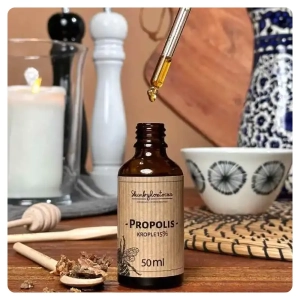
Propolis is the common name for propolis tincture. Propolis is made from bee glue , which you already know very well from our offer, because for many years we have been offering this product as a raw material for creating your own propolis tincture. Bee glue is a mixture of tree resin and secretion from the glands of bees. It is a product containing many nutrients, thanks to which it strengthens our immunity, adds energy and improves well-being. Bee glue in the form of a raw material is an excellent base for preparing health tinctures.
Most often, propolis tincture is created by pouring alcohol over bee glue. This is a traditional way of deriving the health properties of this noble raw material straight from the hive, used for generations and derived from knowledge passed down from generation to generation. We, however, went a step further towards the practicality of using propolis! We used the latest research knowledge and made our tincture using propylene glycol - it is a safe ingredient commonly found in many medicines, dietary supplements, dots or creams (including those for children).
Availability: running out
Dispatched within: 48 h
Honey with ground pollen 1000g
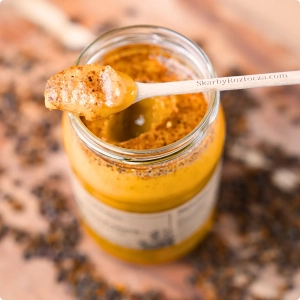
A valuable combination of natural multi-flower honey with the most noble bee product - bee bread. Bee bread has been ground to be able to use its health properties more effectively.
Treatments with products have been popular for hundreds of years. By regularly using honey and bee products, we build our body's natural immunity. The combination of the sweetness of honey with the bitterness of bee bread creates a truly tasty and easily digestible way for our body to use the precious properties of both bee bread and honey itself.
Availability: running out
Dispatched within: 48 h
Bee products straight from the apiary: bee bread, flower pollen (bee pollen) and propolis (bee glue).
Discover the quality of our bee products. Choose from the healthiest products from the apiary and effectively support your body's immunity. If you do not yet know the secrets of the benefits of using bee products, be sure to explore the secrets of apitherapy - the science of the health benefits of using bee products such as: bee bread, pollen, propolis or simply honey from the apiary . Trust our experience and the experience of those wiser than us :) and use bee products regularly to support your body's immunity.
Why is it worth using bee products?
There are many reasons why bee products are valued for their health properties and other uses. The most important of them is supporting the process of building our body's immunity. We encourage you to familiarize yourself with the details of the beneficial effects of each of the popular bee products on our health. Here are some reasons why it is worth using bee products :
Bee pollen:
- It is perfect for regenerating the body, especially after surgery and procedures.
- It contains vitamins, minerals, protein, amino acids and enzymes, which can support overall health.
- Thanks to its ingredients, it can support the immune system, helping to fight infections.
- The enzymes contained in bee pollen can support digestion and assimilation of nutrients, which is why bee pollen helps detoxify the liver and minimize digestive problems such as ulcers, diarrhea and constipation.
Bee pollen (floral):
- It is rich in protein, vitamins, minerals and enzymes - it is a natural multivitamin.
- Bee pollen can help strengthen your immune system and provide energy.
- Contains antioxidants that can help fight free radicals and prevent disease.
Propolis (Propolis):
- It has antibacterial, antiseptic and anti-inflammatory properties.
- It can support wound healing processes and has antiviral and antiparasitic properties.
- Propolis (propolis) is used in natural medicine to fight infections, relieve inflammation and aid in wound healing.
Honey from the apiary:
- It contains many nutrients such as vitamins, minerals and antioxidants.
- It has antibacterial, anti-inflammatory and antiseptic properties.
- May help relieve coughs, sore throats and inflammation.
- Real honey from the apiary has the potential to heal burns and wounds.
Can anyone use bee products?
There are potential health and nutritional benefits to using bee products. However, it is worth remembering that people who are allergic to bee products should be cautious and consult a doctor before using them. In addition, some bee products may have restrictions on use, so it is always a good idea to seek advice from a specialist before starting any therapy based on these products.
Bibliography/Sources:
- Laskowska Emilia, Borawska Maria, Socha Katarzyna: Health properties of bee bread and bee pollen, Bromatologia i Chemia Toxicologiczna, vol. 54, no. 2, 2021, pp. 105-118, DOI:10.32383/bct/154805
- Trzybiński S. All about pollen and its acquisition. Bee bread important and underestimated. Pasieka 2012; 7
- Mroczek JR. Medicinal and nutritional properties of bee products. Wiadomości Zielarskie 2002; 9: 11–12
- Kurek-Górecka, R. Balwierz, Z. Dzierżewicz: Dietetic aspects of bee pollen use, BROMATOLOGY AND TOXICOLOGICAL CHEMISTRY, VOLUME L, 2017, no. 3, 191-197
- Ciborowska H., Rudnicka A.: Dietetics of nutrition of healthy and sick people. Warsaw, Medical Publishing House PZWL 2014: 30-90
- Kędzia, B. The origin of propolis in the light of theories and scientific research. Herba Pol. 2008, 54 , 179–186.
- Department of Medical Microbiology, Antibacterial Properties of Propolis, Poznań University of Medical Sciences. Molecules 2019
- Niedworok J., Kubiak S., Wiaderny J., Properties and medicinal use of propolis. Part II. Wiadomości Zielarskie 1994; 6: 14-15
- Jasicka-Misiak I., Kafarski P.: CHEMICAL MARKERS OF VARIETARY HONEYS. Chemical news. 2011, 65, 9-10.
- Majewska E. et al.: PHYSICOCHEMICAL QUALITY FEATURES OF SELECTED NECTAR HONEYS. BROMAT. CHEM. TOXICOL. – XLVIII, 2015, 3, pp. 440 – 444.
- Janda K., Bąkowska M.: Health-promoting properties of selected honeys. Pomeranian Journal of Life Sciences. 64.


 Bestsellers